
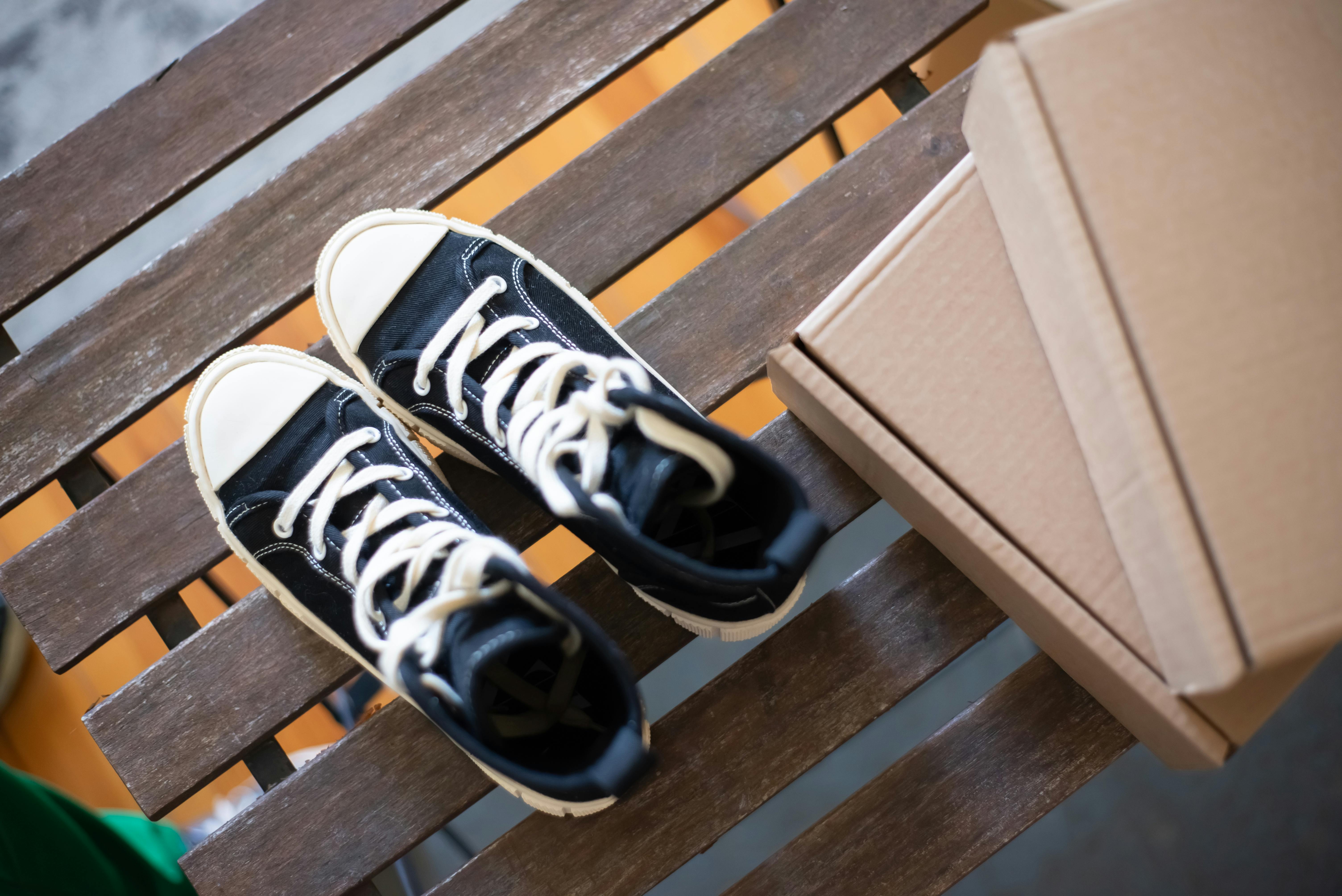
Two shoes marked with the same size can fit completely differently. The reason is the last, a three-dimensional form each shoe is built around, and which no size label describes.
What a last actually is
A last is a solid form roughly foot-shaped, historically carved from wood and now usually moulded plastic. The upper is stretched over it and the sole attached while it is in place.
It is not a copy of a foot. It is a shape that produces a desired silhouette on the outside while leaving a workable volume inside.
Which means the last encodes both the aesthetics of the shoe and its fit, and those two aims frequently pull in opposite directions.
Length is only one of its dimensions
A last has a defined instep height, a heel width, a ball girth, a toe spring and a specific position where the widest part of the foot should sit.
A size number conveys length alone, and often not consistently between systems. Everything determining whether the shoe is comfortable is in the dimensions no one publishes.
This is why a foot that is fine in one brand at a given size can be pinched across the joints in another brand at the same size and length.
Brands reuse lasts across models
Developing a last is expensive, so a maker builds many styles on a small family of them. A brand's whole range often shares two or three underlying forms.
That is the reason fit stays consistent within a brand and varies wildly between them, and why loyalty to a shoemaker is really loyalty to a last.
It also explains sudden changes. When a maker updates a last, customers report that a familiar model no longer fits, even though nothing about the size changed.
Fashion pulls the last away from the foot
Long elegant toes require length beyond the toes, which is why a pointed shoe can measure longer while offering the same interior room as a rounder one.
Narrow waists and low profiles look refined but reduce volume where the foot needs it, particularly across the instep on a high-arched foot.
A last drawn primarily for silhouette will fit a narrower band of feet, which is a design decision rather than a manufacturing failure.
Why widths are the real fix
Going up a size to gain width lengthens the shoe as well, moving the widest point of the shoe past the widest point of the foot and causing creasing and heel slip.
A width fitting uses a different last with the same length and more girth, which is the only change that addresses the actual problem.
Makers offering multiple widths are effectively maintaining several lasts per style, which is costly, and that cost is why the option keeps disappearing from mainstream ranges.