
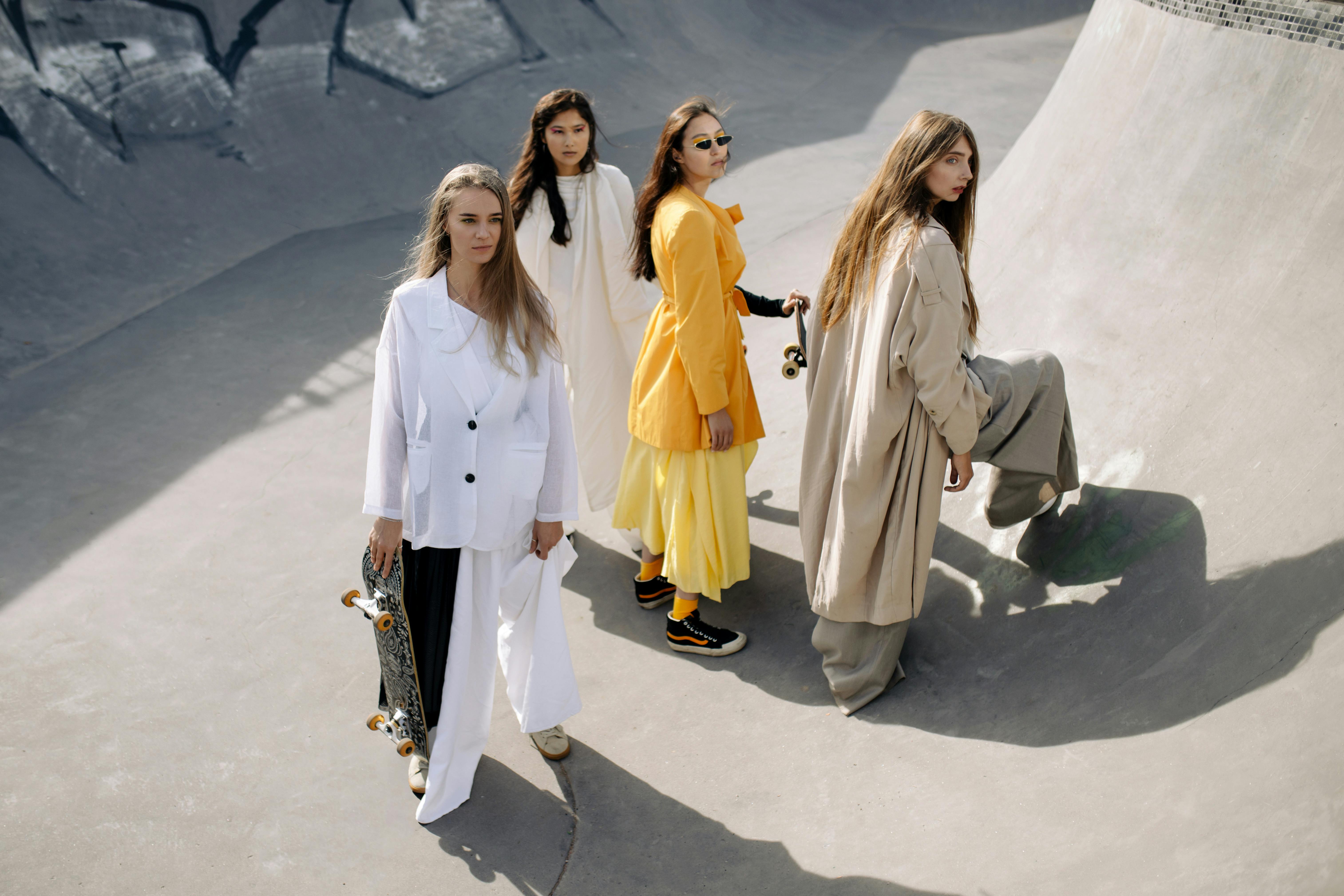
A personal uniform is a small set of near-identical outfits worn on repeat. It spreads not because it is stylish but because it removes a decision that costs more than it returns.
Getting dressed is an unusually bad decision
Most daily choices are either quick or consequential. Clothing is neither. It has many options, weak criteria for judging between them, and a fairly low payoff for getting it right.
The result is a decision that expands to fill whatever time is available. A wardrobe of forty pieces generates far more combinations than anyone can evaluate before leaving the house.
Constraining the set does not reduce the quality of the outcome much, because the difference between the best and third-best option was never large to begin with.
Repetition improves the individual garment
Someone buying five copies of one shirt scrutinises that shirt far more closely than someone buying five different shirts. The stakes of the single choice are higher.
Fit problems that would be tolerated in a garment worn twice a season become intolerable in one worn twice a week, so they get fixed or the garment gets replaced.
Over time the uniform converges on things that genuinely work, while a varied wardrobe keeps a long tail of items that were never quite right.
The wear pattern changes the maths
A uniform concentrates wear. Five shirts in rotation reach the end of their life at roughly the same time, which is a real cost compared with a wardrobe where wear is spread thin.
Against that, nothing sits unworn. The proportion of a uniform wardrobe that earns its place approaches one, where a conventional wardrobe often has a large idle share.
Replacement also becomes predictable. Buying the same thing again is a known quantity, which removes most of the risk that makes clothes shopping tiring.
It only works with the right base garment
A uniform needs pieces that are widely available, stable in production and forgiving across seasons. A discontinued cult item makes a poor foundation.
It also needs a garment appropriate across most of the wearer's week. Someone whose days swing between construction sites and formal meetings cannot compress that into one look.
Where the range of contexts is narrow, the uniform holds. Where it is wide, people typically end up with two uniforms rather than one.
The social cost is smaller than expected
People notice repeated clothing far less than the wearer assumes, partly because observers encode a general impression rather than a specific garment.
Consistency also reads as intent. A repeated silhouette registers as a personal style rather than as a lack of options, provided the garments are maintained.
What does get noticed is a uniform in poor condition, since there is nothing else drawing attention away from a worn collar or a faded seam.