
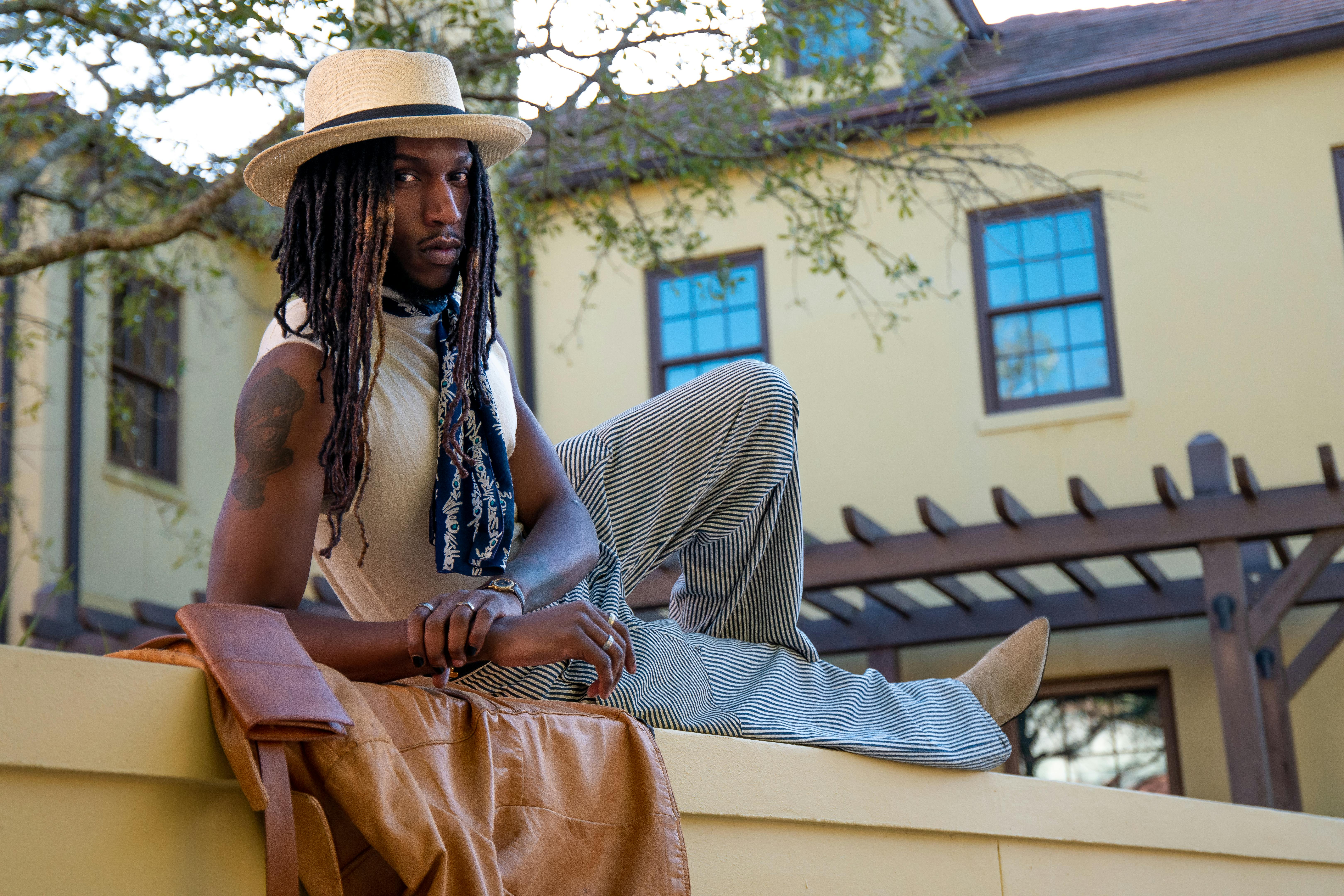
A decade of video calls has changed what people buy without changing how they describe their taste. The camera judges a narrow strip of the body and ignores everything else.
The frame is a portrait, not a full length
A typical call shows shoulders, collar and face. Trousers, shoes, belt and hemline are simply outside the frame for the majority of a working day.
Anything the camera cannot see stops contributing to how someone is perceived at work, which removes most of the pressure that used to justify buying it.
Spending drifts toward the visible band as a result, and the wardrobe develops a top-heavy shape that would look odd if described out loud.
Compression flattens texture
Video is compressed heavily before it reaches the other end of a call. Fine detail is the first thing discarded, because it costs the most data and matters least for recognising a face.
A subtle herringbone or a fine pinstripe can turn into a shimmering mess, and very fine repeating patterns sometimes produce visible interference in the image.
Which is why plain fabrics and larger, lower-contrast weaves read better on camera than the details tailoring traditionally rewards.
Colour behaves differently under a lens
Automatic exposure and white balance adjust to the whole frame. A bright white shirt pulls the exposure down and can leave the face underlit, while black can crush into a shapeless block.
Mid-tones give the camera something reasonable to meter against, which is a large part of why muted colours became the default look of remote work.
Skin tone also shifts with whatever is nearest the face, so a collar colour can warm or cool an entire complexion in the image.
Structure near the neck does the work
Without a full-length silhouette, the shoulder line and the collar carry the impression. A jacket collar, a knitted rollneck or a structured shirt gives the frame a defined edge.
Soft, unstructured necklines lose their shape once compressed and can read as unfinished even when the garment is expensive.
This is why the video-era wardrobe skews toward pieces with a firm neckline and a defined shoulder, regardless of how casual the rest of the outfit is.
The habit outlived the constraint
Offices have partly refilled, but buying patterns have not fully reverted. Wardrobes built around the visible band are already in place and get replaced on their own cycle.
The effect shows up in what retailers stock. Knitwear, overshirts and collared layers occupy more space than they did, while formal trousers occupy less.
A wardrobe optimised for a portrait crop is a durable adaptation, and it will keep shaping purchases long after the calls that produced it become optional.